90-Minute Revolution: How RRTS Will Transform Delhi Aerocity’s Office Space Market
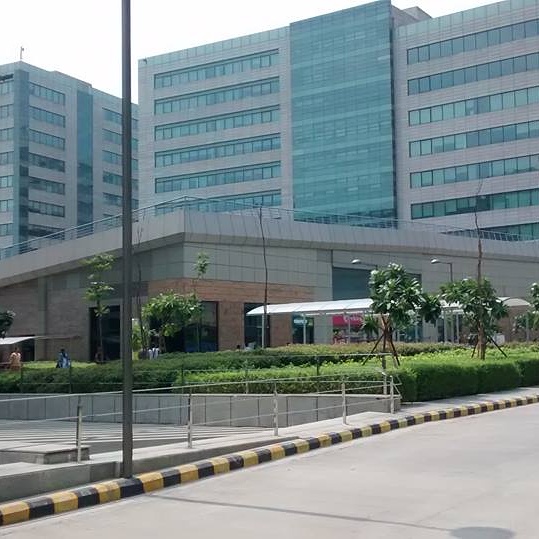
Aerocity’s commercial office market stands at a pivotal point of transformation, currently housing approximately 2.5 million square feet of Grade A office space. This premier business district has established itself as a sought-after location for corporate offices, particularly drawing companies that value proximity to the Indira Gandhi International Airport. The existing office stock primarily comprises modern glass-and-steel structures, with prestigious tenants including major airline companies, consulting firms, and multinational corporations.
Looking ahead, the market is poised for significant expansion with Phase 2 development set to introduce an additional 2.8 million square feet by 2026. Leading developers like DLF and Bharti Realty are at the forefront of this expansion, focusing on creating sustainable, smart office buildings equipped with state-of-the-art amenities. These upcoming developments are being designed to meet international standards, incorporating features like automated building management systems, energy-efficient designs, and advanced security protocols.

Delhi’s True Global Business District Center
The current connectivity infrastructure of Aerocity, while already robust with the Delhi Metro Airport Express Line and proximity to NH-8, is set to undergo a revolutionary transformation with the implementation of the RRTS corridors. This new transportation network will fundamentally alter the accessibility dynamics of Aerocity, reducing travel time from Meerut and Alwar to just 90 minutes. The interoperable hub at Sarai Kale Khan will serve as a crucial junction, enabling seamless travel across the NCR region and effectively expanding Aerocity’s catchment area for both businesses and workforce.
How to Reach Aerocity via RRTS
- Both routes connect to Aerocity within 90 minutes
- Sarai Kale Khan is a major interchange station
- Direct airport connectivity at Aerocity
- Integrated with existing Delhi Metro network
This enhanced connectivity is expected to have a profound impact on the commercial real estate market. Industry analysts project that improved accessibility will drive a rental premium of 15-20% over current rates, which already command Rs 200-250 per square foot per month. The market is anticipated to witness absorption of 0.8-1 million square feet annually post RRTS completion, significantly higher than current absorption rates.
The RRTS project’s impact extends beyond mere transportation efficiency. By connecting Aerocity to major NCR cities, it will create a larger talent pool for companies, making it an increasingly attractive location for businesses looking to tap into skilled workforce from different parts of the region. This expanded access to talent is particularly crucial for sectors like IT, consulting, and financial services, which form a significant portion of Aerocity’s tenant mix.
Moreover, the integration of RRTS with existing metro networks will enhance last-mile connectivity, addressing one of the key concerns for office occupiers. This comprehensive transportation network is expected to trigger a ripple effect in the real estate market, leading to the development of supporting infrastructure including retail spaces, hospitality projects, and mixed-use developments.
The transformation of Aerocity through enhanced connectivity mirrors successful global examples like London’s Canary Wharf and Paris’s La Défense, where improved transportation links catalyzed the development of thriving business districts. As the RRTS project progresses, Aerocity is positioned to emerge as a premier business destination in the NCR region, offering an optimal blend of accessibility, modern infrastructure, and strategic location advantages.
Looking at market projections, the enhanced connectivity is expected to drive rental appreciation of 8-10% annually, while simultaneously reducing vacancy rates from the current 8-10% to more optimal levels. This growth trajectory is supported by the increasing preference of international companies for integrated business districts that offer superior connectivity and modern amenities, a combination that Aerocity is well-positioned to provide with the completion of the RRTS corridors.